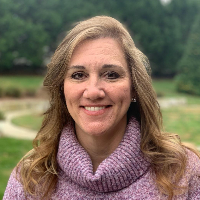
Judy Cline
Calm, practical support for life and loss
- Credentials
- LCSW
- Experience
- 10 years
- Licensed in
- North Carolina
- Languages
- English
- Format
- Online sessions
About Judy
Judy Cline is a licensed clinical social worker who supports people coping with stress, anxiety, grief, parenting challenges, relationship strain, and life changes. She brings ten years of counseling experience and often draws on her background in hospice grief work.
Judy aims to create a caring, nonjudgmental space where clients can begin to understand what they want to change and how to move forward. She believes the relationship between client and therapist matters most.
Background and approach
Judy offers acceptance and steady support so clients can notice their strengths and try new ways of handling hard moments. Sessions focus on practical steps people can use in daily life, not only on talking about problems. Her approach adapts to each person.
Judy uses techniques from cognitive behavioral therapy and acceptance and commitment therapy to help with thoughts and actions. She also uses attachment-informed ideas and emotionally-focused work when relationship patterns are part of the concern. Judy encourages active participation.
She helps set clear, achievable goals and coaches clients through small experiments between sessions. That hands-on approach is meant to build confidence and create visible change over time. Based in North Carolina, Judy counsels in English and offers video calls, phone sessions, live chat, and text-based messaging.
She holds an LCSW credential (licensed clinical social worker) and brings a practical, compassionate style to family and parenting-related concerns and many other areas of life.
How her approaches translate to online therapy
Acceptance and Commitment Therapy, or ACT, helps people notice unhelpful thoughts and take values-based action. It’s useful when someone wants concrete steps to live more in line with what matters. Cognitive Behavioral Therapy, or CBT, focuses on identifying and changing patterns of thinking and behavior that keep problems going. That approach often helps with anxiety, depression, and stress. Emotionally-Focused Therapy, or EFT, pays attention to emotional responses and patterns in relationships and can be helpful when improving connection and communication are goals.Choosing the right approach is a collaborative process. Judy discusses goals and preferences with each person and adjusts methods as needed. The plan can change over time as what helps becomes clearer, and clients are invited to take an active role in shaping their work together.
Online sessions are offered by video call, phone, live chat, or text-based messaging to make therapy more flexible. These formats let people fit conversations into busy lives, check in between meetings, and choose the way of working that feels most comfortable. Judy uses these options to keep care accessible while tailoring each session to the needs of the person.
Acceptance and Commitment Therapy (ACT)
Less about arguing with difficult thoughts, more about loosening their grip and acting on what matters to you anyway. Values and committed action carry the work, which suits conversation at a distance.
Attachment-Based Therapy
Looks at how early bonds shaped what you expect from closeness, and how that plays out now with a partner, a parent, or your own children.
Client-Centered Therapy
The direction comes from you rather than from a set programme. The therapist offers a warm, non-judgemental space to think out loud and work at your own pace. Online, this rests on the relationship rather than on being in the same room.
Frequently asked questions
What kinds of problems does Judy help with?
What is her general approach in sessions?
How much clinical experience does she have?
What credential and location are listed?
Which languages are supported for sessions?
What session formats are available?
How are costs and billing handled?
How do I begin working with Judy?
Specialties and expertise
Top specialties
Also works with
- ADHD
- Adoption and foster care
- Aging and geriatric issues
- Anger management
- Attachment issues
- Blended family issues
- Cancer
- Career difficulties
- Caregiver issues and stress
- Coaching
- Compassion fatigue
- Coping with life changes
- Coping with natural or human-caused disaster
- Depression
- Divorce and separation
- Emptiness
- Family conflicts
- Family of origin issues
- Family problems
- Forgiveness
- Hospice and end-of-life counseling
- Intimacy-related issues
- Isolation / loneliness
- Life purpose
- Midlife crisis
- Money and financial issues
- Mood disorders
- Parenting issues
- Post-traumatic stress
- Pregnancy and childbirth
- Relationship issues
- Seasonal Affective Disorder (SAD)
- Self-love
- Trauma and abuse
- Veteran and Armed Forces Issues
- Women's issues
- Workplace issues
- Young adult issues
Therapeutic approaches
- Experience
- 10 years
- Licensed
- North Carolina
- Languages
- English
Next step
Talk to Judy
- Takes a few minutes
- Nothing to set up just to look
- Stop at any point